Navigating the expansive landscape of online casino games can be daunting for newcomers. The sheer volume of options, coupled with unfamiliar terminology and varying rule sets, often leads to hesitation. For those stepping into online gaming in 2026, the objective is to identify games that offer a low barrier to entry, clear mechanics, and a reasonable chance for early engagement and small wins, without requiring extensive strategic knowledge or significant initial investment. This guide focuses on identifying these accessible entry points, allowing new players to build confidence and understand fundamental casino principles before exploring more complex offerings.
How to Choose Your First Online Casino Game
Selecting an initial online casino game involves prioritizing simplicity and clarity. Consider the following factors:
- Rule Complexity: Opt for games with straightforward rules that can be understood within minutes. Avoid games requiring memorization of complex strategy charts or intricate betting sequences for your first few sessions.
- House Edge (RTP): While all casino games favor the house, some offer a better return to player (RTP) percentage than others. Higher RTP generally means lower house edge, providing more play time for your budget. For beginners, understanding that a lower house edge extends play is more critical than maximizing theoretical returns.
- Pacing and Decision-Making: Games that allow for slower, self-paced play are often better for beginners. Avoid fast-paced games where rapid decisions under pressure are required, as this can lead to errors and frustration.
- Betting Options: Simple betting structures are ideal. Games where you can place a single, clear bet and understand its outcome immediately are preferable to those with multiple interdependent wagers.
- Entertainment Value: Ultimately, the goal is enjoyment. Choose a game whose theme, visuals, or basic mechanics appeal to you, as this will sustain interest through the learning phase.
1. Online Slots
Online slots represent the most accessible entry point into casino gaming, characterized by their immediate playability and absence of required skill or strategy. Players simply select a bet amount, spin the reels, and await the outcome determined by random number generators (RNGs). Modern slots feature diverse themes, engaging graphics, and various bonus features like free spins or mini-games, which activate randomly. Their appeal to beginners lies in the instant gratification and the potential for significant payouts from small wagers, without needing to understand complex rules or make strategic decisions.
Best for: Players seeking pure chance-based entertainment, minimal decision-making, and diverse thematic experiences. Ideal for short, casual gaming sessions.
Pros:
- Extremely simple rules; no strategy required.
- Wide variety of themes, features, and volatility levels.
- Potential for large jackpots from small bets.
- Fast-paced action with immediate results.
Cons:
- Generally higher house edge compared to table games.
- Lack of strategic depth may not appeal to all players long-term.
- Can lead to rapid bankroll depletion if not managed.
Verdict: Slots are the quintessential beginner game due to their zero learning curve. They provide immediate entertainment and the thrill of potential wins, making them an excellent starting point for understanding how online casinos operate without the pressure of complex decision-making.
2. European Roulette
European Roulette offers a balance of simplicity and engagement, making it highly suitable for new players. The game involves a wheel with 37 pockets (numbers 0-36) and a ball. Players place bets on where they predict the ball will land. Basic bets, such as red/black, odd/even, or high/low, offer nearly 50/50 odds and are straightforward to understand. The house edge in European Roulette (2.70%) is lower than its American counterpart (5.26%) due to the single zero pocket, making it a more favorable option for beginners. The game's pace allows for considered betting, and the visual nature of the wheel adds to its appeal.
Best for: Players who enjoy classic casino aesthetics, prefer a game of pure chance with clear odds, and appreciate a slower, more contemplative pace than slots.
Pros:
- Simple rules with a variety of easy-to-understand betting options.
- Lower house edge than American Roulette.
- Engaging and iconic casino experience.
- No strategic decisions required once bets are placed.
Cons:
- Can be fast-paced in live dealer formats, requiring quick decisions.
- More complex betting options exist, which can be overwhelming initially.
- House edge, while lower than slots, is still higher than some other table games.
Verdict: European Roulette is an excellent choice for beginners looking for a traditional table game experience. Its clear betting options and favorable odds (compared to American Roulette) provide an accessible entry point into the world of strategic betting without demanding complex calculations.
3. Baccarat (Punto Banco)
Baccarat, particularly the Punto Banco variant, is one of the simplest card games in a casino, requiring virtually no player decisions once bets are placed. The game revolves around two hands – the "Player" and the "Banker" – with the objective being to predict which hand will have a total closest to nine. Players can bet on Player, Banker, or a Tie. The dealer handles all card drawing rules, eliminating the need for players to learn complex strategy. The house edge on the Banker bet is particularly low (around 1.06%), making it statistically one of the best bets in the casino.
Best for: Players seeking a sophisticated card game experience with minimal decision-making, a low house edge, and a focus on pure chance.
Pros:
- Extremely simple to play; no strategic decisions required from the player.
- Very low house edge on Banker bets.
- Fast-paced and elegant game.
- Clear, predictable outcomes.
Cons:
- Can seem intimidating due to its association with high rollers.
- Tie bet has a significantly higher house edge.
- Lack of player agency might bore some players.
Verdict: Baccarat is an ideal beginner game for those who want to engage with a card game without the mental overhead of strategy. Its low house edge on the Banker bet offers good value, and the game's simplicity allows new players to focus on understanding betting mechanics.
4. Online Scratch Cards
Online scratch cards replicate the instant-win experience of physical scratch-off tickets, making them incredibly simple for beginners. Players purchase a virtual card, then "scratch" off panels to reveal symbols or numbers. If a predetermined combination is revealed, a prize is awarded. There is no skill involved; outcomes are entirely random and immediate. These games are perfect for quick, casual play and offer a straightforward path to understanding basic online casino interfaces without any rules to learn beyond identifying matching symbols.
Best for: Players looking for instant gratification, zero learning curve, and very short, casual gaming sessions. Ideal for micro-bets.
Pros:
- Absolute simplest form of online casino gaming.
- Instant results and immediate payouts.
- Very low minimum bet options often available.
- Diverse themes and visual styles.
Cons:
- Generally high house edge (low RTP).
- Lack of strategic depth or engagement beyond revealing symbols.
- Can be repetitive over longer sessions.
Verdict: For the absolute beginner seeking the quickest and most uncomplicated entry, online scratch cards are unmatched. They offer immediate feedback and require no prior knowledge, serving as a gateway to understanding online betting mechanics.
5. Keno
Keno is a lottery-style game that is easy to understand and play, making it suitable for beginners. Players select a set number of spots (typically between 1 and 20) from a larger pool of numbers (usually 1-80). After selections are made, 20 numbers are randomly drawn. Payouts are determined by how many of the player's chosen numbers match the drawn numbers. The game's pace is generally slow, allowing players to consider their number choices without pressure. Keno is purely a game of chance, requiring no strategy beyond number selection.
Best for: Players who enjoy lottery games, prefer a relaxed pace, and are comfortable with pure chance outcomes. Good for extended casual play.
Pros:
- Very simple rules, easy to learn quickly.
- Relaxed pace allows for contemplation.
- Potential for large payouts from small wagers.
- No strategic decisions required during gameplay.
Cons:
- Generally high house edge (low RTP) compared to many other casino games.
- Can feel slow for players seeking rapid action.
- Outcomes are entirely random; no skill component.
Verdict: Keno provides a straightforward, low-pressure introduction to online number-selection games. Its lottery-like format is instantly familiar to many, offering a comfortable entry point despite its typically higher house edge.
6. Online Bingo
Online Bingo translates the classic social game into a digital format, making it highly accessible for beginners. Players purchase virtual bingo cards, each containing a grid of numbers. As numbers are called out randomly, players mark them off their cards. The first player to complete a predetermined pattern (e.g., a line, a full house) wins. Online versions often automate the marking process (auto-daub), reducing the chance of errors and allowing beginners to focus on the game's flow and potential wins. Its social aspect, often through chat rooms, adds an engaging dimension.
Best for: Players who enjoy social gaming, simple rules, and the thrill of anticipation. Ideal for those seeking a community feel.
Pros:
- Extremely simple rules; easy to understand and play.
- Often features a social component with chat rooms.
- Automated card marking simplifies gameplay.
- Low cost of entry with affordable card prices.
Cons:
- Outcomes are entirely random; no skill or strategy involved.
- Can be slower-paced than other casino games.
- Payouts are generally smaller, focused on frequent, modest wins.
Verdict: Online Bingo is an excellent social and simple game for beginners. Its familiar structure and often automated gameplay remove barriers, allowing new players to enjoy the anticipation of wins in a relaxed environment.
7. Dragon Tiger
Dragon Tiger is an extremely simplified version of Baccarat, making it even more accessible for absolute beginners. The game involves just two cards being dealt: one to the "Dragon" position and one to the "Tiger" position. Players bet on which card will be higher, or if it will be a Tie. Aces are low, and Kings are high. There are no additional card draws or complex rules. This straightforward comparison makes it incredibly easy to follow and understand within seconds, focusing purely on predicting the higher card.
Best for: Players seeking the absolute simplest card game experience, rapid rounds, and minimal betting options. Ideal for quick, decisive play.
Pros:
- Unrivaled simplicity in card game rules.
- Very fast-paced rounds.
- Clear betting options (Dragon, Tiger, Tie).
- No strategic decisions required.
Cons:
- Tie bet has a very high house edge.
- Lack of depth may not appeal to players seeking strategic engagement.
- Limited betting variety.
Verdict: Dragon Tiger serves as an ideal entry-level card game due to its bare-bones rules. It strips away all complexity, allowing beginners to grasp the fundamental concept of betting on card outcomes without any strategic pressure.
8. Sic Bo
Sic Bo is an ancient Chinese dice game that, despite appearing complex initially due to its betting table, is fundamentally simple for beginners when focusing on basic bets. The game uses three dice, which are shaken and revealed. Players bet on the outcome of the dice roll. For beginners, focusing on "Small" (total 4-10) or "Big" (total 11-17) bets offers nearly 50/50 odds and a clear understanding of the game's core mechanic. These bets have a relatively low house edge, similar to red/black in roulette. The visual nature of the dice and the immediate outcome make it engaging.
Best for: Players interested in dice games, those who enjoy a variety of betting options (even if they start simple), and a game of pure chance.
Pros:
- Simple "Big" or "Small" bets offer good odds for beginners.
- Exciting and fast-paced gameplay.
- Visually engaging with the dice roll.
- Wide range of potential bets for future exploration.
Cons:
- The betting table can look intimidating with many options.
- Some complex bets have a very high house edge.
- Entirely a game of chance; no skill involved.
Verdict: Sic Bo provides a unique dice-gaming experience for beginners, particularly when focusing on the straightforward "Big" and "Small" bets. It offers a different flavor of chance-based gaming that is easy to pick up.
9. Blackjack (Basic Strategy Focus)
While Blackjack has strategic depth, its fundamental rules are simple enough for beginners to grasp quickly: get a hand total closer to 21 than the dealer, without exceeding 21. For beginners, the focus should be on understanding when to "Hit" (take another card) or "Stand" (keep current cards). Many online casinos offer basic strategy charts, which, when followed, significantly reduce the house edge to one of the lowest in the casino (around 0.5% with optimal play). This blend of simple rules and the potential for skill to influence outcomes makes it rewarding for new players willing to learn a basic chart.
Best for: Players who want a card game with an element of skill, enjoy making decisions, and are willing to learn a basic strategy to improve their odds.
Pros:
- Simple core rules (Hit or Stand).
- Lowest house edge in the casino with basic strategy.
- Player decisions influence outcomes, adding engagement.
- Widely available in various formats (live dealer, virtual).
Cons:
- Requires memorization of basic strategy to play optimally.
- Can be intimidating if played without understanding strategy.
- Fast pace in live dealer games can pressure beginners.
Verdict: Blackjack is an excellent choice for beginners who are ready for a game that combines luck with a degree of player agency. Learning basic strategy is a small investment for a significant improvement in long-term play and enjoyment.
10. Video Poker (Jacks or Better)
Video Poker, particularly the "Jacks or Better" variant, is an accessible poker-style game played against a machine, not other players. The goal is to form the best possible five-card poker hand. Players are dealt five cards, choose which to hold, and then draw new cards for the discarded ones. Payouts are based on the final hand's strength, with a pair of Jacks or better typically being the minimum winning hand. Jacks or Better is ideal for beginners because its payout table is straightforward, and optimal strategy, while existing, is relatively easy to learn and apply compared to traditional poker, offering a very low house edge (often under 1% with perfect play).
Best for: Players who enjoy poker mechanics but prefer playing against a machine, want a low house edge, and are willing to learn a simple strategy to maximize returns.
Pros:
- Combines elements of poker with slot machine simplicity.
- Very low house edge with optimal strategy.
- Player decisions directly impact outcomes.
- Self-paced play allows for strategic thinking.
Cons:
- Requires learning basic strategy for optimal play.
- Can be less visually engaging than modern slots.
- Payouts rely on forming specific poker hands, which can be infrequent.
Verdict: Jacks or Better Video Poker offers an excellent blend of strategic depth and low house edge for beginners who appreciate card games. It's a great way to learn poker hand rankings and decision-making in a low-pressure environment.
11. Three Card Poker (Ante/Play)
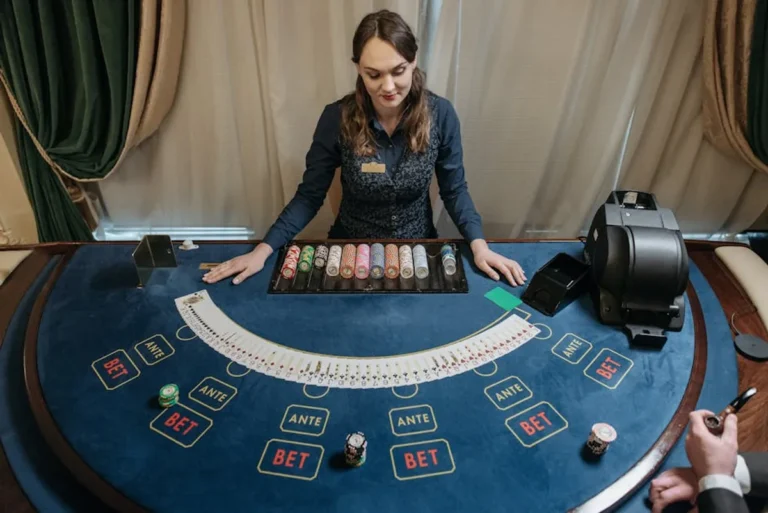
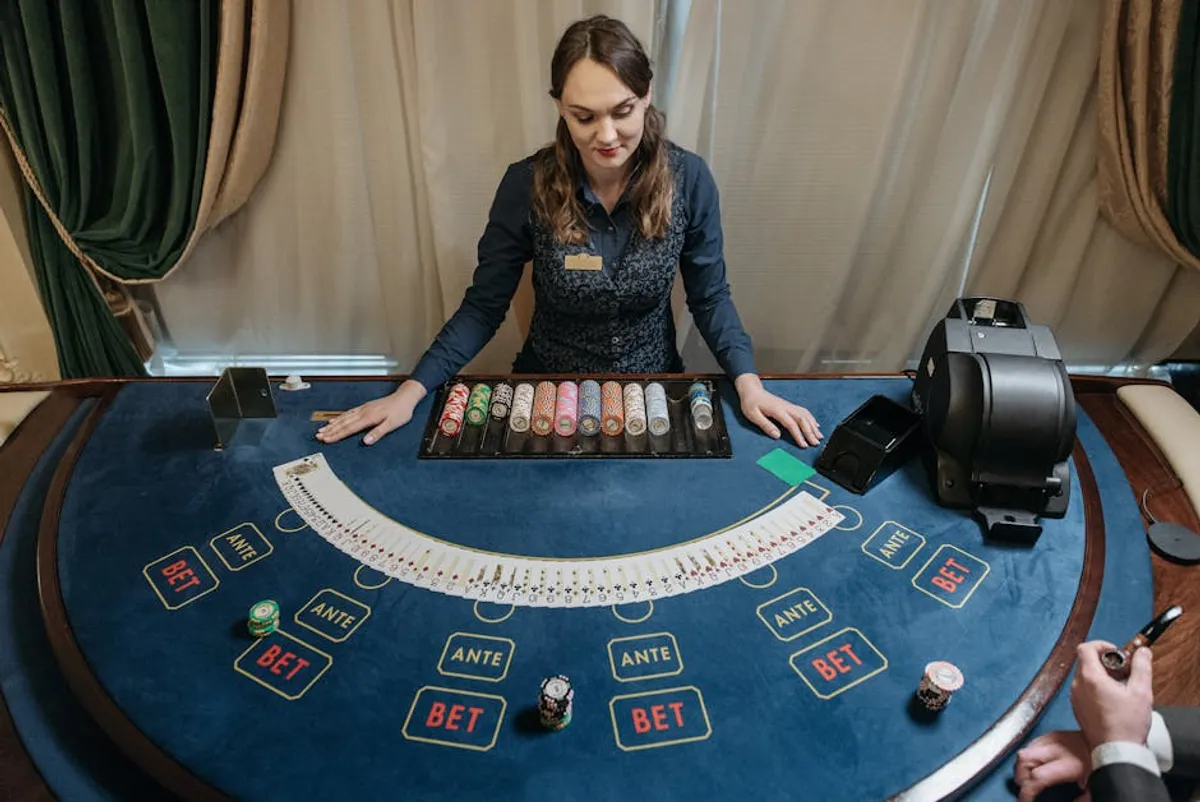
Three Card Poker simplifies traditional poker into a fast-paced game against the dealer. The most common variant for beginners is the "Ante and Play" game. Players place an "Ante" bet, receive three cards, and then decide whether to "Play" (place an additional bet equal to the Ante) or "Fold." The dealer needs a Queen high or better to qualify. If the dealer qualifies and your hand is better, you win both bets. If the dealer doesn't qualify, you win the Ante and the Play bet pushes. This simplified structure makes it easy to learn hand rankings and basic decision-making without the complexity of multiple betting rounds or bluffing.
Best for: Players who enjoy poker but want a quicker, simpler version played against the house, with clear decision points and a lower learning curve than traditional poker.
Pros:
- Simplified poker rules, easy to learn hand rankings.
- Fast-paced and engaging.
- Clear decision points (Play or Fold).
- Offers bonus payouts for strong hands regardless of dealer's hand.
Cons:
- Requires understanding basic poker hand rankings.
- Optimal strategy involves knowing when to fold, not just play.
- Side bets (Pair Plus) often have a higher house edge.
Verdict: Three Card Poker is an excellent introduction to poker-style games for beginners. Its streamlined rules and direct competition against the dealer provide a clear, engaging experience that builds confidence in card game decision-making.
12. Craps (Pass Line Bet)
Craps can appear intimidating due to its complex betting layout and rapid-fire action, but for beginners, focusing solely on the "Pass Line" bet simplifies the game significantly. The Pass Line bet is made before the "come out" roll. If the shooter rolls a 7 or 11, you win. If they roll a 2, 3, or 12, you lose. Any other number becomes the "point." To win, the shooter must roll the point again before rolling a 7. This single bet offers one of the lowest house edges in the casino (around 1.41%) and allows beginners to participate in the excitement of the game without needing to understand the myriad other bets. It's a game of pure chance, but the communal energy is unique.
Best for: Players seeking a high-energy, social dice game who are content with focusing on a single, low-house-edge bet. Ideal for those who enjoy a communal atmosphere.
Pros:
- The "Pass Line" bet is simple to understand and has a low house edge.
- Highly engaging and social atmosphere, even in online versions.
- Fast-paced and exciting.
- Offers a unique casino experience.
Cons:
- The full betting table is very complex and can be overwhelming.
- Other bets have significantly higher house edges.
- Can be very fast-paced, requiring quick decision-making if exploring beyond basic bets.
Verdict: Craps, when limited to the Pass Line bet, is a surprisingly accessible and exciting game for beginners. It offers a low house edge and a dynamic experience that stands apart from other casino offerings, provided new players stick to the foundational wager.
Measuring Success and Choosing the Right Game
For beginners, success in online casino gaming extends beyond monetary wins. It encompasses enjoyment, responsible play, and a foundational understanding of game mechanics. To choose the right game and measure your progress:
- Define Your Goals: Are you seeking pure entertainment, a social experience, or the thrill of potential wins? Your primary motivation should guide your game selection.
- Budget Management: Set a strict budget for each session and stick to it. Understanding your bankroll and how quickly a game consumes it is a crucial measure of responsible play. Games with lower house edges generally extend playtime for a given budget.
- Understand RTP and Volatility: While not needing to memorize exact figures, grasp that Return to Player (RTP) indicates the theoretical percentage of wagered money a game pays back over time. Volatility refers to the frequency and size of payouts; high volatility means fewer, larger wins, while low volatility means more frequent, smaller wins. Beginners often benefit from lower volatility games for more consistent engagement.
- Practice in Demo Mode: Many online casinos offer free-play or demo versions of their games. Utilize these to understand rules, test strategies (where applicable), and get comfortable with the interface without financial risk. This is the most effective way to "try before you buy."
- Personal Enjoyment: The most important metric is whether you are having fun. If a game feels like a chore or causes frustration, it's not the right fit, regardless of its house edge or popularity.
Frequently Asked Questions
What is RTP (Return to Player)?
RTP, or Return to Player, is a theoretical percentage indicating the amount of wagered money a slot or casino game pays back to players over a large number of plays. For example, a game with 96% RTP theoretically returns $96 for every $100 wagered over its lifetime. It's a long